Up to 50€ coupon code for your 1st order by subscribing to our newsletter
Wine and spirits masterpieces to your doorstep
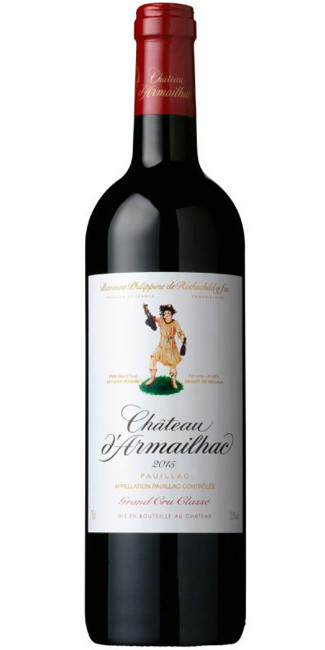
Château d'Armailhac 2015, a Pauillac 5th Grand Cru Classé, is a blend of 60% Cabernet Sauvignon and 29% Merlot, aged for eighteen months in barrels, one-third of which are new. The 2015 vintage, sunny and full-bodied, offers a firm tannic structure underpinned by notes of black cherry, licorice, and cocoa. A Pauillac for the cellar, intended for discerning connoisseurs with a drinking window of 2025–2035.
See more ...Secure packaging and transport insurance
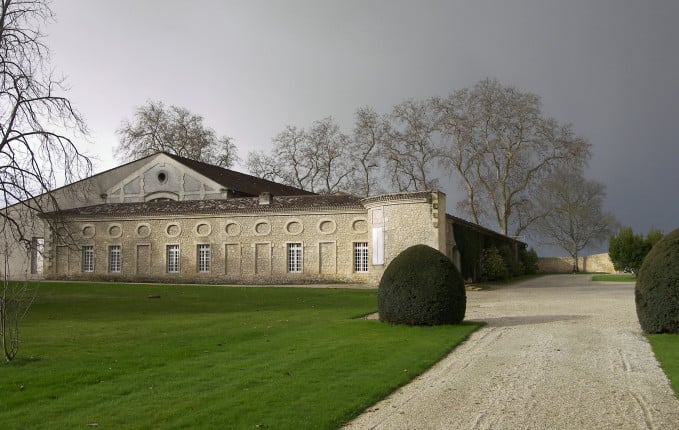
The Château d'Armailhac is one of the most famous Domaines in the Pauillac appellation. Having belonged to the d'Armailhacq family since the 18th century, it was awarded the title of Fifth Grand Cru Classé in the famous classification of Médoc wines for the Paris Universal Exhibition.
It was acquired by Baron Philippe de Rothschild in 1933, who named it "Mouton-Baron-Philippe". In 1975, when his daughter Baroness Philippine took over its management, it became "Mouton-Baronne-Philippe". Finally, she decided to restore its identity, permanently naming it Château d'Armailhac in 1991.
Located on gravel and clay-limestone soils, its vineyard covers 76 hectares of vines, of which 55% are Cabernet Sauvignon, 35% Merlot, 8% Cabernet franc and 2% Petit Verdot. The wines are aged for 18 months in French oak barrels, 50% of which are new.
The Château d'Armailhac is a wine that combines power and refinement, complexity and elegance, with a beautiful aromatic expression typical of Pauillac.
The 2015 vintage in Pauillac was built on remarkable phenolic ripeness, driven by a hot, dry summer that allowed the Left Bank grape varieties to reach optimal maturity without excess. For Château d’Armailhac, a 5th Grand Cru Classé of the appellation, this growing cycle resulted in a full-bodied, rich wine, whose tannic structure supports a beautifully rich aromatic profile. The imperial purple color immediately signals the vintage’s density.
The winter of 2014–2015 was mild, promoting an early emergence from dormancy. The relatively dry spring limited the risk of fungal diseases. The summer was marked by consistent heat and sustained sunshine, with no major episodes of water stress thanks to the deep reserves in Pauillac’s gravel soils. The harvest began on September 16 and ended on October 5, 2015, during a favorable weather window that allowed for a consistent harvest.
The winemaking of the 2015 Château d’Armailhac followed the wine estate’s rigorous protocol, as the property is owned by the Rothschild family. Ageing took place over eighteen months in oak barrels, divided into three parts: one-third new oak, one-third one-year-old oak, and one-third two-year-old oak—a choice that preserves the structure of the dominant Cabernet Sauvignon while allowing for the gradual integration of oak. This moderate use of new oak allows the fruit aromas to express themselves without being masked.
The wine displays a deep garnet color with purple highlights; it is dense and brilliant. The nose is expressive from the moment the bottle is opened, revealing notes of ripe red fruits—Burlat black cherries, blackcurrants, and blackberries—complemented by roasted notes and a hint of marzipan. With aeration, nuances of licorice and vanilla become more pronounced, accompanied by a subtle spicy undertone. On the palate, the attack is clean and full-bodied, driven by a generous Merlot that rounds out the structure of the Cabernet Sauvignon. The mid-palate unfolds with aromas of candied cherry, cedar, and graphite. The tannins, firm yet well-integrated, support the wine without any harshness. The finish lingers with chocolate notes and a persistent hint of licorice, with a length that attests to the quality of the vintage.
Château d’Armailhac 2015 is already generous upon opening, provided it is decanted several hours before serving to fully release its rich aromas and flavors. However, the solid structure of its tannins and the freshness of its natural acidity give it definite aging potential, during which secondary aromas of forest floor, blond tobacco, and sweet spices will gradually enrich the vintage’s fruity profile.