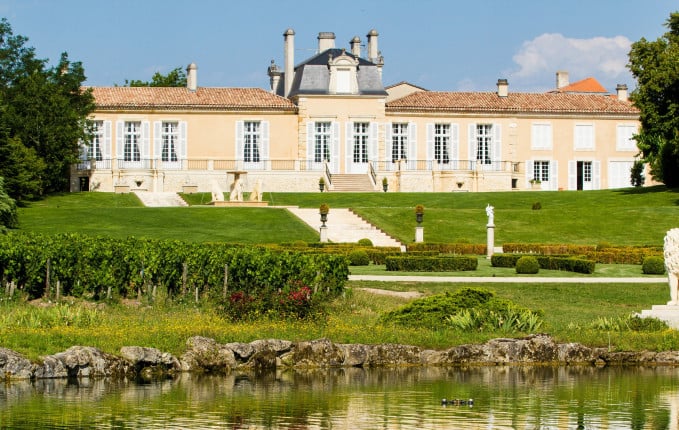
A great name in Bordeaux vineyards, no longer in need of introduction, rightly dubbed the "Premier des Seconds crus". A very old Médoc property, Domaine was seized during the French Revolution, then divided into three Léoville estates between 1826 and 1840: Barton and Poyferré and Las Cases, the original Domaine of Marquis Pierre-Jean Las Cases.
During the 1855 classification for the Paris Universal Exhibition, Château Léoville Las Cases was crowned Second Grand Cru Classé, and became the property of the Delon family at the end of the century. Today, Jean-Hubert Delon is in charge of its management.
The vineyard of Domaine covers some 60 hectares, 55 of which are fully enclosed within the famous Las Cases enclosure, on a high-quality terroir facing the Gironde estuary. The soils are composed of gravel and the subsoils are gravelly-sandy, containing a proportion of clay. The grape varieties are 61% Cabernet Sauvignon, 21% Merlot and 16% Cabernet Franc, with an average age of 30 years. The wines are aged for 18 months in 50% new barrels.
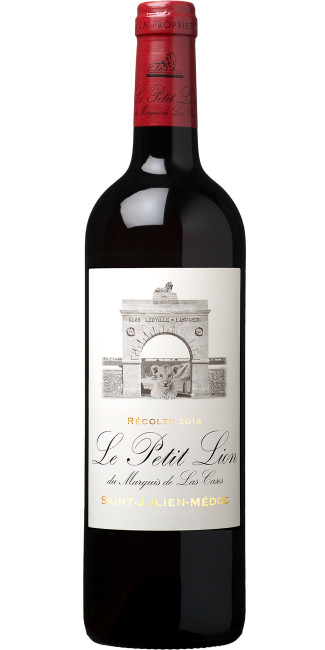
Since 2007, Domaine has produced a Second wine, Petit Lion du Marquis de Las Cases.
The wines of Léoville Las Cases have left their mark on the wine world, asserting themselves as complex, refined and profound, aging with elegance.